Just another WordPress site

Category: Students Stories

Hear about students’ experiences with IFI!

  • Seeds & Signs

    *Paul, an Argentinian Ph.D. student, worked hard to make his way to the States.
    He battled through international entrance exams, strained finances, and an inhibited social life just to get the chance to study in a place far away. Thankfully, he doesn’t have any regrets.

    “I am in love with this beautiful country. Here I found the stability and quality of life that my country cannot give me,” Paul says. “People have been extremely nice to me, and there is a wonderful sense of joy and peace that I had never experienced.”

    Many of those people that helped Paul adjust were IFI Staff and volunteers. By providing airport pickup, helping him secure furniture, and connecting Paul to other Hispanic and Latino students – IFI showed Paul the love of Christ that lives in His followers. But he didn’t always see it that way.

    “I had a very strong atheism,” he recalls. “I hated religious people. I attacked religious people. I mocked religious people. I did terrible things.” 

    Even with his disdain for religion, Paul still had a curiosity for philosophical thought, including the Christian Bible.

    While attending his first IFI Welcome Picnic, Paul expressed interest in joining an IFI Bible Discussion Group. He connected with Rich Mendola’s group, and became a consistent attendee. But the relationship wasn’t limited to weekly group meetings.

    “I remember when I got sick of COVID…Rich knew. He prepared chicken soup and drove from his home (which is very far away) to personally give it to me. My two beloved friends Xia and Moise gave me a gift that same night: snacks and a very beautiful picture, made by them, [and] signed by them. I was still an atheist, but that night, I could not stop thinking: ‘If God truly exists, He is manifesting His enormous love through these amazing friends.’”

    Moments like these opened Paul’s willingness to explore the Bible and the person of Jesus more closely. In addition to the Bible Discussion Group, Paul visited the Vision conference, a gathering of international seekers and believers meant to cultivate their pursuit of Christ. The conference, the group meetings, the support, and the friendship were all seeds that were being planted in Paul’s heart. But just like with any seed, there were growing pains.

    “I was facing a terrible existential crisis regarding my identity and my capability to continue with my Ph. D., asking myself whether having moved to the US had been a correct decision or whether I had ruined my life. I was seeking to know Jesus, but neither the Bible study sessions, nor the Vision Conference helped. So I was still an atheist. I was open to receiving God, but I wasn’t able to find Him.”

    It wasn’t until he had hit his lowest point that Paul decided to pray, and seek a sign.

    “I was in Arizona because I had to go to a math conference. I was in Arizona alone, and I had to be there for a complete week. I was suffering in my heart and my soul. I started to panic: everything was wrong in my life. I remembered some of the philosophers I had been reading. [They] said precisely: ‘if you’re an atheist or an agnostic and you’re seeking for God, sit down and pray to Jesus. If you’re sincere enough He will appear.’  I started praying for the first time in my life. I told Jesus that I could not do this anymore alone. I needed His help. I was willing to renounce everything I needed to renounce in order to follow His word. I wanted to renounce doing things on my way and start doing things in his way. But to do such a step, I needed to believe. So I said, ‘Jesus, if you truly exist, please give me a sign so that I know You’re there.’”

    Jesus was there. He provided multiple signs that blew Paul’s skeptical mind. That’s when Paul got the picture.

    “At that moment, I said alright Jesus, I’m yours!” Paul shares with happy resignation. “The way in which I understand all this is: my skepticism was very strong, but God is stronger. Since the first moment in which I opened my door to Him, he decided to play my own game with my own rules. He defeated me. After He defeated me, He extended His hands to me and invited me to walk with Him. How could I say no?”

    In return for his “yes”, Jesus gave Paul a new sense of purpose in life. Today, he continues to study the Bible, attend IFI gatherings, and share his experience with others. He’s even entered a local church and is beginning to understand how he can help others grow their faith. God has given an increase in Paul’s life.

    “I have planted, Apollos watered; but God gave the increase.” (1 Corinthians 3:6)

    It all just shows what God can do with a few seeds, and a few signs.
    *Name of student has been changed for the sake of privacy

    Please pray that Paul continues to cultivate community in his current church and build on his understanding of God’s purposes for his life.

  • Raising the Flag

    It’s your first day on campus.

    Everything is so big, new and mysterious. You’re in a new country. You’re awestruck at how different everything and everyone is from you and where you grew up. All day, it seems like you’re constantly reminded: ”I’m not home anymore.”

    Then, surprisingly, as your day comes to a close, you see the American flag. It’s not raised nor waving in the wind like you remember; it’s not even very big. It doesn’t stand out to anyone but you…because it’s yours.


    The flag is one of the most universal objects of symbolism throughout the world. Flags typically are used to represent communities, nationalities and/or ethnicities. The vast majority of people groups in the world have a flag that represents their shared values, beliefs and identity as a nation or tribe. Even the different elements of a flag (color, images, shapes etc.) speak to specific moments and ideas that communities cherish and draw inspiration from. The key, though, is that this collection of symbols unites the individuals in the community. It not only carries meaning, but helps those who understand its meaning to feel connected to each other. This mutual understanding and connection creates a space of safety and sense of home in each member of the group.

    But what happens when an individual is physically separated from the group?

    For most, if not all, international students, being separated from the familiarity and safety of their home countries has multiple negative effects. Despite being surrounded by people, they can feel very lonely. They have to face the anxiety of trying to learn the nuances of a new environment. Some even lose hope that they’ll ever be able to adjust.

    So how can we help? Well, we can start by sharing a little piece of home.

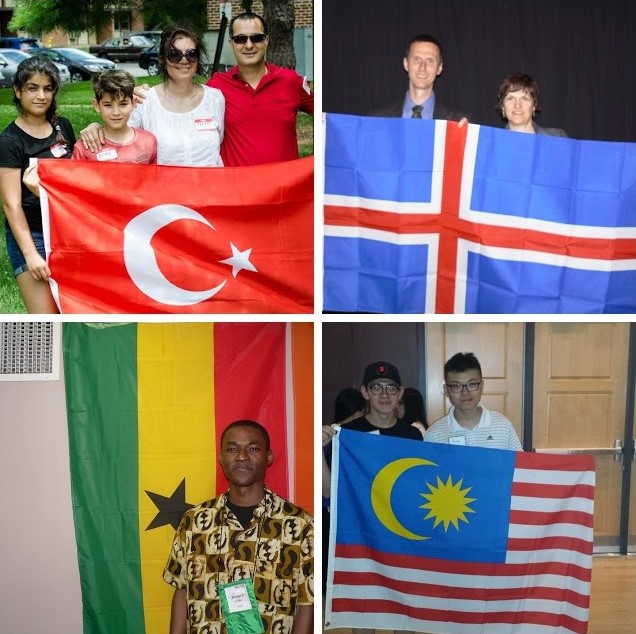
    Every year, IFI Columbus hosts a Welcome Party for international students on the Ohio State University campus. Hundreds of students join us for dancing, food, and games. But the main attraction by far is the photo booth, where students can find and take a picture with their home country’s flag. The excitement on each face is remarkable, reflecting an appreciation to see their homes recognized, represented, and celebrated!

    But the value of making these flags available doesn’t end at the party.

    “…When the enemy comes in like a flood, The Spirit of the LORD will lift up a standard against him.” – Isaiah 59:19

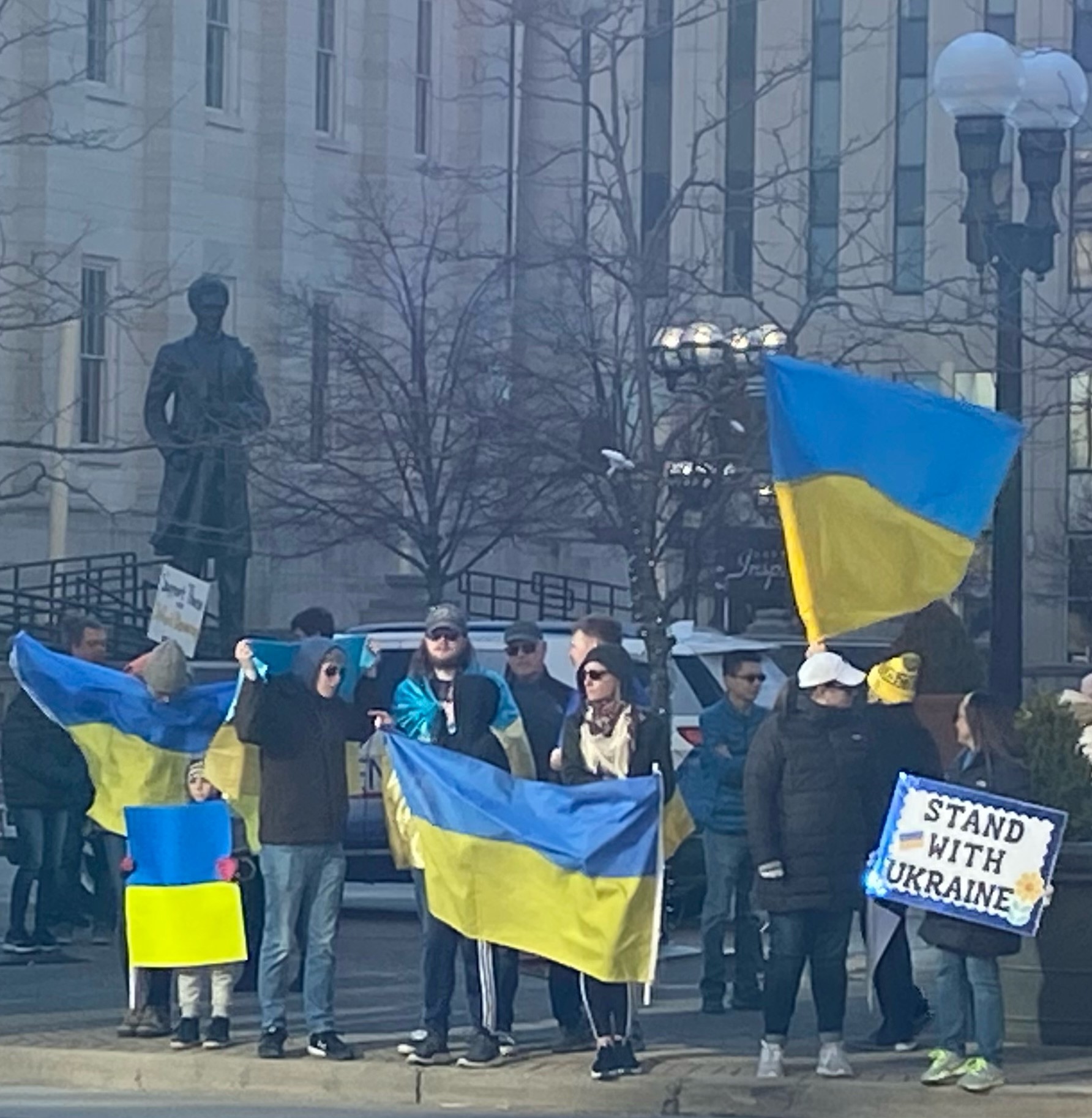
    A former OSU student who had attended multiple IFI events often saw the Ukraine flag on display. When the conflict in Ukraine began, she planned to participate in a protest demonstration in the US. She reached out to our staff to request to borrow the flag for the protest. We gladly shared the flag, recognizing the significance of the request. Flags are used in wars to represent each of the nations in conflict; raising the flag on the battlefield symbolizes preparation to fight. Raising the Ukrainian flag at the protest helped Ukrainians in the US both identify with their countrymen in battle, and support them. 

    So the significance of sharing the flags of so many nations goes beyond decoration, or entertainment. Seeing their communities’ values and identity represented makes students feel at home  in the US, and helps them stay connected to the other members of their community, even when they’re miles apart.

    And IFI is happy to do its part to make that happen for every international friend we meet.

  • Facing Challenges

    *Jane, a Chinese graduate of the Ohio State University, was often away from home as she grew up.

    “When I went to middle school, I was in a boarding school: you can go back home every week. In my high school, I went to Shanghai and I went back home every month. I think that my parents threw me into a more independent situation compared to other kids.”

    These experiences helped Jane develop her relationship building skills and a sense of independence. And when she came to the US, these skills served her well; but there were other challenges she needed to overcome.

    Jane needed a place to live while she waited to move into her dorm. She reached out to another Chinese student attending OSU. She referred Jane to IFI.

    “She said ‘you’re going to another country and living in a stranger’s home for free.’ Is it safe?” Jane wondered. 

    Both Jane and her parents had their concerns. But after researching IFI and asking more students about what they had heard or experienced, Jane and two other Chinese students decided to sign up for an IFI host family.

    “It’s just very lucky that we connected with the Foell family. I didn’t speak very perfect English, but they could still understand me pretty well. They treated us so well. I feel maybe if I was hosted by someone else I might not have gotten the same experience. I feel like they’re my home in Columbus. They’re a huge part of my life.”

    Her time with the Foells helped make Jane’s transition to living in the U.S. more smooth and enriching. Her desire to build relationships also pushed her to take advantage of the opportunities and activities that IFI and OSU offered. She was especially impacted during IFI Bible studies.

    “I feel like a lot of the stories, they’re very inspiring. So I think that every time I’m in Bible study, I can learn something and reflect on what I was doing in the past.”

    For her first two years, Jane felt very comfortable with her life in the U.S. But as her senior year approached, she began to feel overwhelmed.

    She was struggling to meet all the requirements for graduation, and she felt increasing pressure from her personal relationships to excel and achieve academically.

    “I was a mess. I was literally feeling so sad every day and calling my parents, crying to them every day.”

    During this time, her involvement with IFI had decreased: she was not attending IFI activities, or talking to the Foell family, all due to a singular focus of getting the best grade possible.

    “But then I felt like, one day, ‘maybe I should go to Bible study,’ and that Bible study really helped me a lot. I was talking to some people from that Bible discussion, and we talked about my future, not just like my life, but also my job. It helped me so much and after that, I became much better. It’s interesting that when you’re in the challenges, you feel like life is so hard, but once you overcome it, they’re just like marks on the sand; they will be washed away by the waves very quickly.”

    Jane graduated from OSU two years ago, beginning her career as an accountant. But she will never forget how IFI and her host family helped her, and how it can help others.

    “There are definitely a lot of international students who might face similar challenges but can’t find a way. They don’t have opportunities to interact with IFI or meet very nice people. So they might miss home or might be just focused on academics. I would definitely recommend them to go to the activities by IFI because it’s just a very welcoming environment. You can interact with all other international students…you see the world in a different way.”


    *Name changed for the privacy of the student.

  • Good to the Bone

    Students finds goodness is a Christian home.

    Growing up in the fast paced, diverse city of Karachi, Pakistan was very different from living in Ohio for *Eria, an Orthopedic Research Fellow at Ohio State University’ Wexner Medical Center.

    “It was always sunny and warm,” she chuckles.

    Despite the appealing climate, Eria’s childhood was faced with several challenges. The high crime rates made it unsafe for women to walk the streets alone at certain parts of the day. Women also were limited in their educational opportunities. In addition, her community (within a developing nation) did not have immediate access to many of the utilities and health benefits that Americans do. This context helped Eria develop a resilient attitude, as she and the people in her predominately Muslim community learned to work their way around these issues. Still, that fortitude might have been inside her all along.

    “When I was a little girl, I would wear a wedding dress to every party I went to. I would also offer the hosts the opportunity to see me dance to my favorite song. I was not a shy child.”

    She was, however, a very smart child who loved the sciences. Studying biology came easily, and she enjoyed it immensely. Considering that children from Pakistani families typically follow in the career path of their parents, this could have led to a conflict in her home (her father is an informational technologist). Thankfully, her parents were very supportive of her educational goals.

    “I think people should choose a field that they enjoy. My choices are determined by what I enjoy the most.”

    But if I say, “I will not mention his word or speak anymore in his name,” his word is in my heart like a fire, a fire shut up in my bones. I am weary of holding it in; indeed, I cannot. (Jeremiah 20:9)

    This led to her studying at the Aga Khan University, the top medical university in Pakistan. She settled on orthopedics, a challenging, highly competitive, and male dominated field involving long and tedious hours. But why?

    “It’s rewarding that patients are often very happy to see direct results from the procedures. But personally, when I was a part of the surgeries, I didn’t realize any time had passed. I later realized that I liked invasive surgeries, because I can go inside the human body, appreciate its complex anatomy, and fix the issues for myself.”

    This desire to take a look at the inside of unfamiliar places led Eria to take an opportunity to travel to the United States for a clinical elective, shadowing American orthopedic surgeons for four weeks at the Kansas University Medical Center. She appreciated the lack of professional hierarchy among the medical staff, the polite feedback from her coworkers, and the punctuality of the medical personnel. All of this made her want to work in the United States.

    After returning to Pakistan to graduate, Eria sought an opportunity to return to the States. She decided to complete her residency at the OSU; but unlike during her first experience, her living arrangements would not be handled by the university.

    “In Pakistan, we have very interdependent families. So with coming to America, I was anxious about trying to build a life on my own. I didn’t know anyone, and I didn’t have the finances to stay in a hotel for an extended period of time.”

    Thankfully, Eria befriended another Pakistani student moving to Columbus who had connected with IFI. Her friend connected her with Rich Mendola, IFI’s CEO, who arranged for Eria to stay with  *Jim Drake and his wife, a Christian family. This was another opportunity to take a look at the inside of space she had never been exposed to.  Still, Eria’s anxiety persisted.

    “I didn’t know if it was safe, or if Christians would be accommodating to Muslim practices. How could someone just welcome me into their home without knowing me?” Considering how great her anxiety was, it’s beautiful how a simple text calmed the storm in heart. 

    “Pakistani or Indian cuisine?” That one question from Mrs. Drake overwhelmed Eria, as she realized that these strangers were ready and willing to consider her needs. When she met the Drakes, this became more apparent as they made every effort to make her feel comfortable: offering her water and engaging her in a conversation about her work and family. But the Drakes didn’t stop there. They committed to only serving Eria food that was religiously acceptable to eat, and made sure she had her daily tea in a jar with her name. Coincidentally, the Drakes even had a bidet (a common fixture in Pakistan) in their bathroom.

    “What is the probability of that?”

    As they spent time together, Eria began to develop a sense of family with the Drakes. And despite her parents’ concerns about her living with a Christian family, Eria felt safe and assured.

    “Muslims aren’t always sure about how people from other religions will receive them. But this [living with the Drakes] was probably the best thing that could have happened to me. I told my parents, ‘if God orchestrated my being with this family, there must be a reason.’”

    The family she had gained in the Drakes, and the friendship she made with *Jay, an OSU campus minister, encouraged Eria to attend an IFI Bible Discussion. She began to learn more about Christ’s teaching, discuss the similarities between Christianity and Islam, and understand how Christians apply the Bible to their daily lives. At her first meeting, she expressed how her experiences helped her understand that showing this degree of love is what Christ wants his followers to do.

    ‘These people honor me with their lips, but their hearts are far from me…By this everyone will know that you are my disciples, if you love one another. (Matthew 15:8; John 13:35)

    So what happens when you take a look at the inside of a Christian family’s life, home, and heart?

    Simple, you find the goodness of Jesus. 

    “It’s hard to believe that people can do good out of their heart with no ulterior motive: IFI has those people. They’re doing good because they just want to do good.”

    *Names were changed for the privacy and safety of the student and volunteers.

  • The Developer

    Student digs deep to develop his relationship with God.

    Life involves inevitable change. Often, this change is quick and can catch one off guard.

    For *Izzy, this reality unfolded before his eyes at a young age.

    “I grew up in Kumasi, the second-largest economic city in Ghana. When I was growing up, Kumasi was actually covered with a lot of vegetation. During the British colonial period, Kumasi was actually referred to as the Garden City of West Africa due to how beautiful it was. By the time I graduated from High School, what we call “development” had led to natural habitats being replaced by buildings and mechanic shops.”

    The change and loss that Izzy perceived as his home developed around him made a life-long impression on him. He wanted to learn why and how this was happening. But processing the complexities that are involved in industrial and land development can seem overwhelming. Not for a mind like his, though.

    “In academics, I have always been very critical in thinking and I like to analyze things. I used to be very good at a local game called ‘Oware’. It is more technical and involves a lot of calculation and building good strategies to win.”

    Izzy’s capacity and passion for unwrapping the layers of an issue led him to study International Development in the States, focusing on geopolitical and economic imbalances in the world. His goal is to earn his PHD, and actively contribute to efforts that help developing countries establish a solid understanding of the methods that governmental authorities use to affect the lives of people every day.

    “Everything around us is about international developments. You need to know why things are going on in order to help communities understand how to move forward.

    These issues are difficult to tackle, but Izzy’s desire to create positive change helps him keep going. Maybe, this desire comes from the change he experienced at the hands of God.

    “When I received Christ back in High School, I stopped getting involved in bad behaviors. I saw God as a father, there to give me things. I prayed to Him, but only when I needed something.”

    This perception did not change until after he graduated High School. Izzy’s pastor, after two years of watching him grow, gave him the role of Prayer and  Bible Discussion Leader for his church. There was just one problem: Izzy hadn’t read much of the Bible. He began doing so to prepare for his new role, and suddenly found that he was understanding God in a new way.

    “You have that feeling when you know God is close. I started to hear His voice and he began to speak and direct me personally instead of through someone else.”


    Draw near to God, and He will draw near to you…- James 4:8

    As he continued to read the Word of God and listen to the voice of God, Izzy began to notice changes in himself. The hot temper that had followed him throughout his life was cooling. The weaknesses of his character were beginning to come to the surface and being resolved. He began praying to ask God for direction and guidance, not just things he could use. God was developing his heart.

    So when Izzy saw IFI’s advertisement for its ISEED internship program, an opportunity to gain professional experience and undergo spiritual growth, Izzy was more than willing to participate. He would recommend that other graduate students do the same: 

    “The classes and book recommendations helped me to understand the context of things in the Bible, which helps appreciate the word of God and build my trust in Him.”

    So as the world continues to develop around him, and he tries to help others keep up, Izzy can trust that the development that God is making in his heart will continue as well.

    *Name is changed for the privacy and safety of the student

  • The Explorer

    Student discovers acceptance and community.

    *Rob, the first son of ten siblings, grew up in an Iranian farming village that always seemed too small. “I would spend most of my time in the new library that opened, reading as many fantasy and folklore books as I could. Each book was a new world to explore.”

    Rob’s desire to explore also extended to academics, where he excelled, but not without challenges. After he completed elementary school, his father’s expectation was that Rob would come to work on the farm and help train his younger brothers. However, Rob wanted to complete high school, which required him to travel into the nearest city. Despite his father’s disapproval, Rob attended high school in the city at age 14, where he experienced his first battle with culture shock.

    “I grew up speaking Turkish; in the city they spoke Persian. Life in the city was so different, and I was really shy.” So shy, in fact, that when one of his teachers asked him to retrieve a dry-erase marker from another classroom, Rob felt so much pressure that he ran into the classroom, snatched the marker, and ran back.

    His shyness and insecurities, however, did not stifle Rob’s desire to explore and achieve his academic potential. When he encountered the opportunity to attend the Sharif University of Technology, the most prestigious university in his country, the 200 question entrance exam didn’t phase him. “Why wouldn’t I be able to make it in?” he thought. So he locked himself in his bedroom for 450 days, studying for 12 hours each day. When he emerged from his fortress of solitude, he faced the exam, and passed. In fact, his score ranked 9th out of 1 million applicants. He received a full scholarship to Sharif University and later earned the opportunity to study abroad at the Ohio State University in the United States. Still, the exciting opportunity came with challenges.

    “My first day in this country was very discouraging,” Rob says sadly. “I felt like I was being targeted by airport officials, who also made it clear that I could not return home to see my family because of nationwide travel restrictions. I also could not open a bank account with a certain institution, because they could not open accounts for Iranians. I was starting to believe what people back home were saying about Americans.”

    Sitting outside of that bank, feeling dejected and rejected, Rob looked up and saw a few college students playing frisbee. One of them seemed to notice him and invited him to play. Eventually that same group became his only friends for his first semester in the United States. But as he began to feel more comfortable in his new environment, tragedy struck his family.

    “My father died. I received a call afterward. My family said that they didn’t tell me he was dying because they knew I would try to come home and I couldn’t.”

    During his second semester, Rob battled depression, insecurity, and isolation, causing his studies to suffer. He realized he was at risk of losing his scholarship before he contacted his academic advisor to share what he was going through. Working with his advisor, he was able to pass his classes. He also made a choice.

    “I can’t live like this,” he told himself. “Life is too short.”

    So Rob began to explore again. He spent time with many student organizations, read self help books, and studied different faiths. He was searching for friendship, meaning, and peace. Christianity seemed the most accessible faith to study, and he developed a desire to experience the lifestyle of a Christian. However, Rob often found that his curiosity and questions were not always welcome. Eventually, his search led him to an IFI Bible discussion group. Rob immediately noticed that IFI volunteers and staff were just as concerned about welcoming him as they were about teaching about Jesus.

    “IFI was one of the most diverse groups, making it easier for me to feel like I belong. They celebrate different cultures and know how to respect other people, and that makes me feel comfortable.”

    As he grew more comfortable, Rob began to learn more about Jesus and how God relates to him, “I didn’t feel worth anything, always trying to achieve and succeed. But I read Matthew 6:33 and thought ‘Maybe I’m pursuing the wrong things.’ I want the peace that passes all understanding. Jesus taught me I don’t have to do anything to be good enough for God.”

    “Seek the Kingdom of God above all else, and live righteously, and he will give you everything you need.” Matthew 6:33 (NLT)

    Though Rob doesn’t consider himself a Christian, he desires to become more Christ-like and live out Biblical principles. He continues to attend and engage with IFI events and Bible discussion groups, making new friends and learning more each day. The prayer is that as he continues to pursue Christ, he will find the peace that he is looking for, and then begin to explore everything that God has planned for his life.

    *Name is changed for the privacy and safety of the student

  • The Gift of Jesus

    “Human anger does not produce the righteousness God desires” 

    James 1:20

    Frank is a Chinese international student who came to OSU for college last fall. In his testimony, he shared that coming to OSU was a total coincidence for him. Little did he know that what he considered as a coincidence was actually God at work. When he attended his first Christmas celebration at an IFI volunteer’s home last year, he had his first opportunity to interact with Christians.

    The time he spent with the host made him curious about who Jesus is. He was then invited to a local Chinese church and recently prayed to accept Jesus. Knowing Jesus is transforming Frank’s life. The Holy Spirit is softening his temper and teaching him to think and act more like Jesus, as he is convicted that “Human anger does not produce the righteousness that God desires.” (James 1:20) Please pray that the Holy Spirit would continue his wonderful, steadfast work in Frank.

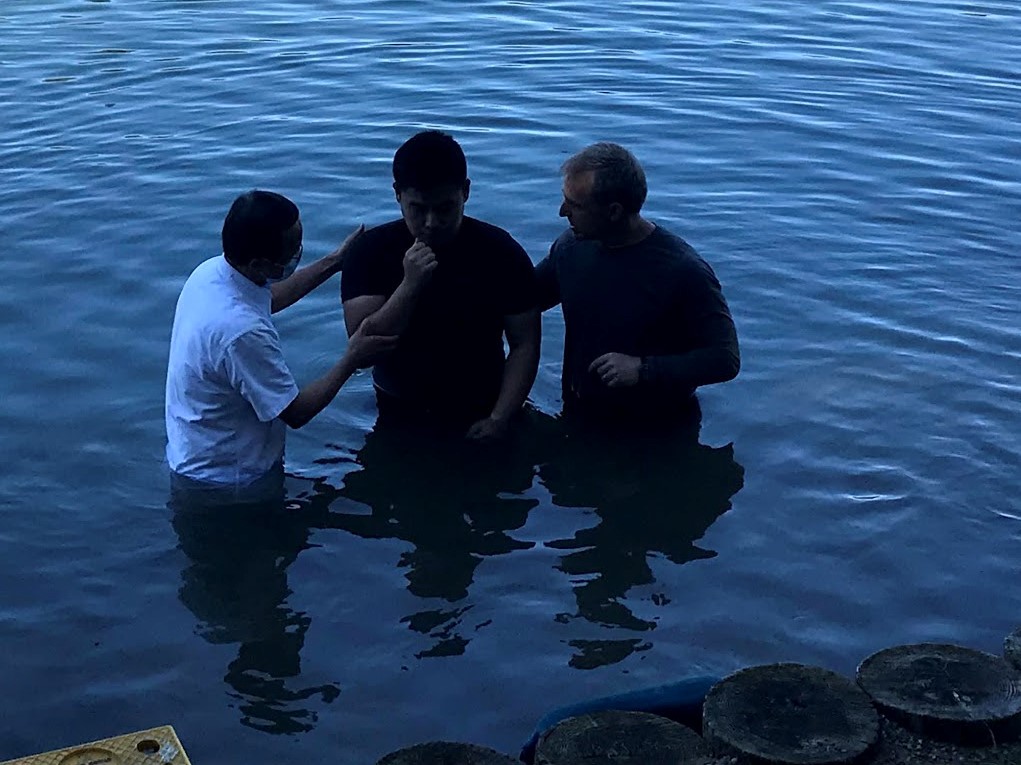
    His Chinese pastor and volunteer David Duff baptized him in Poste lake on September 19th. IFI Intern Xia introduced Frank to David at a Valentines day party. IFI Intern Junshuo (Mike) has been meeting weekly with Frank most of the year. They will all hear the voice of the master saying ‘Well done, my good and faithful servants.” (Matthew 25:21)

    One plants, another waters, but God brings the harvest.  Thank you for sowing seeds of faith into many students like Frank!